
Why A-class became the standard
In 2026, the premium real estate market in Marbella changed dramatically. If five years ago solar panels and heat pumps were an optional add-on, today they are included in the basic requirements list for most serious buyers.
This is not just a trend. It is a structural shift driven by three independent forces: EU regulations, operating economics, and buyer psychology.
European Union regulation
Spain complies with the EU EPBD (Energy Performance of Buildings Directive). Under this directive, by 2026 all new buildings must meet the nZEB standard (near zero energy buildings, buildings with almost zero energy consumption). This means new villas and apartments in Marbella must include built-in renewable energy systems and advanced insulation.
For existing properties, new requirements have been introduced for the EPC (Energy Performance Certificate). It is now required when selling and when renting out. Buyers and banks request the current EPC first. Villas with low efficiency classes (D, E, F, G) lose liquidity.
New buyer expectations
According to European market research from 2025 to 2026, properties with solar panels sell on average 20% faster and for 15% higher prices than comparable standard properties. This is no longer statistics from “green idealists.” It is real behavior from premium buyers.
The A-class buyer profile is shifting. It is no longer only environmentally focused clients. It is also a young affluent generation (Gen Z and millennials), technology entrepreneurs, top managers at international companies, retirees (for them low operating costs are critical), and Scandinavians who are used to environmental standards at home.
Financial logic
A-class villas can save up to 70% on operating costs. For a large villa, this is a difference of €15,000 to €30,000 per year. Over 10 years, that is €150,000 to €300,000, which covers the cost of a solar and air-source system 3 to 5 times.
At the same time, older villas from the 1990s and 2000s with outdated systems cost 30% to 40% more to operate. As electricity tariffs rise, this gap only grows.
What makes an A-class villa
A modern A-class villa in Marbella is a complex engineering system with a dozen interconnected components.
Solar panels
The standard for a 2026 premium villa is a photovoltaic system with a capacity of 8 kW and above. For a large villa with a pool and air conditioning, 12 to 20 kW is suitable.
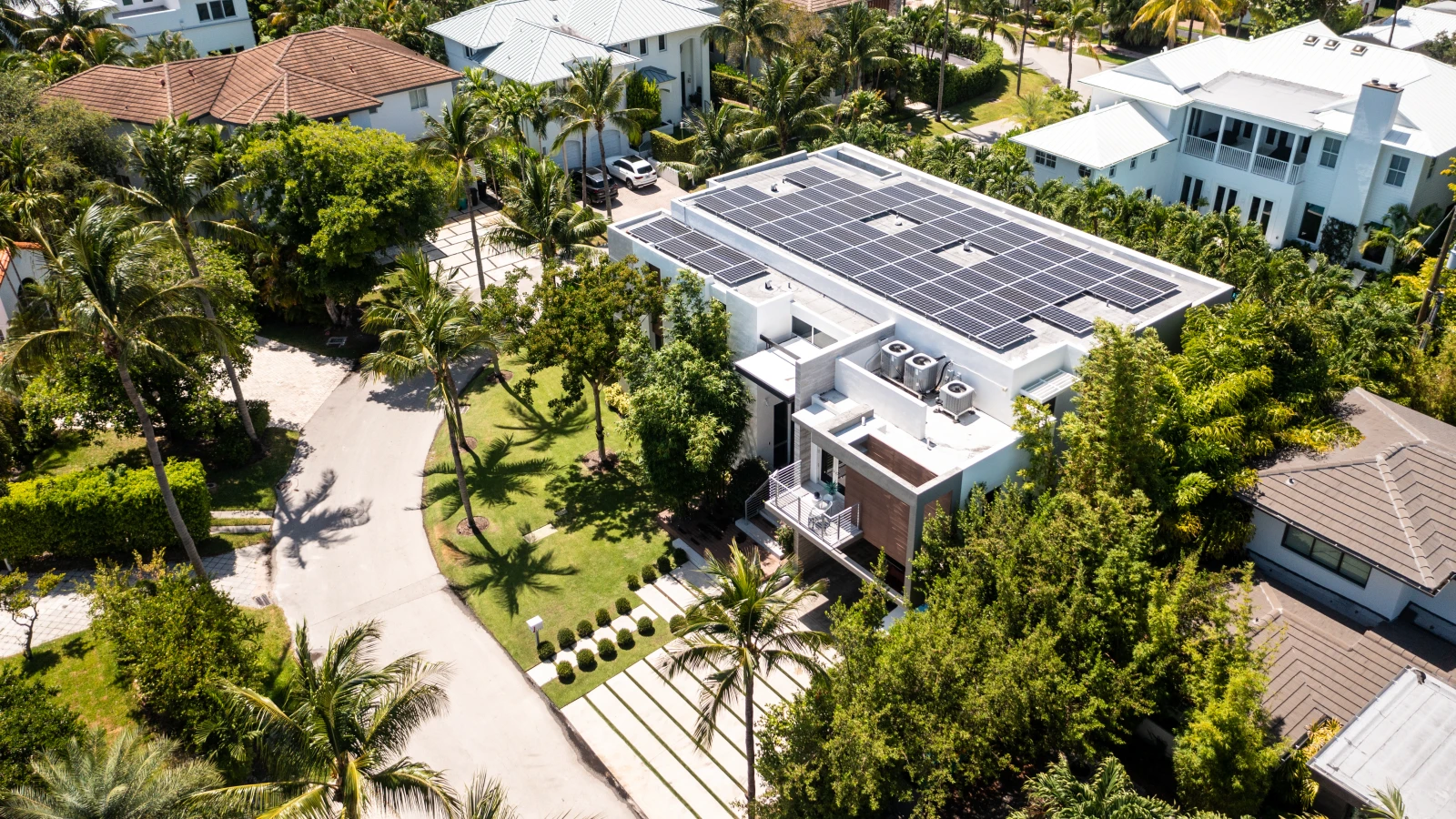
With 320 sunny days per year in Marbella, a solar installation covers 70% to 90% of annual electricity consumption for a typical villa. This means almost complete disconnection from the grid, with the option to sell excess power back to the grid.
Installation cost: from €12,000 for an 8 kW system to €35,000 for a 20 kW system with premium panels and installation. Payback period: 4 to 6 years.
Air-source systems
Air-source heating uses heat pumps that extract energy from the air for heating, cooling, and water heating. In terms of efficiency, they are 3 to 5 times better than traditional gas or electric systems.
The main names in the Marbella market: Daikin Altherma, Mitsubishi, Vaillant. Installing an air-source system for a 300 m² villa costs €15,000 to €35,000. After installation, heating and air-conditioning operating costs drop by 60% to 75%.
Batteries and energy storage
For full energy independence, solar panels are combined with batteries. This allows storing excess daytime generation and using it in the evening and at night.
2026 standard: Tesla Powerwall (3rd generation), DEYE, Pylontech. Capacity 10 to 30 kW*h for a typical villa. Cost: €8,000 to €25,000 depending on capacity.
Insulation and the thermal envelope
This is the invisible but most important part of the system. Without quality thermal insulation, solar panels and heat pumps work inefficiently.
The modern standard includes: advanced wall insulation materials (mineral wool, polyisocyanurate foam), triple-glazed windows with low-emissivity coating, thermal breaks in door and window frames, and insulation for floors and the roof.
The Sismo Building Technology used in new Marbella projects reduces villa energy consumption by more than 35% using insulation quality alone.
Smart home and automation
Here it is not just about comfort. It is a way to optimize the energy balance in real time.
Main premium systems:
Crestron. A universal platform that brings together climate control, lighting, audio, and security.
Lutron. Strong in lighting and blind control.
Gira. A German platform popular with buyers from Northern Europe.
Airzone. Zonal climate control (different temperatures in different rooms).
What these systems do for energy efficiency: they automatically regulate heating and cooling based on occupancy, sun orientation, and weather forecasts. They close blinds during peak heat hours. They turn on floor heating one hour before waking. They redirect solar energy to the most efficient consumer at any given moment.
Cost of installing a full smart home system for a 400 m² villa: €25,000 to €80,000.
Passive design
One of the most underestimated components. A properly designed villa can reduce energy consumption to 50% even before installing active systems.
Main principles: orient the home to the south with the right roof overhangs that block summer sun and allow winter sun. Large windows on the south and west sides with proper glazing. Shaded areas and green roofs over the main rooms. Natural ventilation through cross-airflow.
Water saving
A parallel story. In Andalusia, water is becoming an increasingly important topic due to climate change and drought periods.
A-class standards include:
Rainwater collection for garden irrigation.
Recycling grey water (from sinks and showers) for toilets and the garden.
Efficient drip irrigation for gardens.
Low-consumption plumbing fixtures.
A pool with a cover (reduces water evaporation by 70%) and filtration systems that do not require frequent draining.
Certifications: what they mean
Several key standards that the market focuses on.
A-class EPC certificate
A minimum standard for the 2026 premium market. Class A is the highest efficiency category, meaning annual consumption of less than 60 kW*h per m² for most types of housing. The certificate is issued by an accredited architect or engineer.
BREEAM certification
A British standard for sustainable construction with ratings: Pass, Good, Very Good, Excellent, Outstanding. The main Marbella projects (Real de la Quinta, Palo Alto) aim for the Excellent level.
BREEAM certification adds a significant premium to the property cost on the international market, especially for buyers from the UK, Scandinavia, and Germany.
LEED certification
The American equivalent of BREEAM. Less common in Spain, but found in projects aimed at American buyers.
Passive House (Passivhaus)
The strictest standard. Passive House properties consume less than 15 kW*h per m² per year (about 10 times less than a typical home). In Marbella, such projects are still rare, but they are appearing in the premium segment.
Key A-class projects in Marbella 2026
Below we look at several leading modern projects that set the standard for sustainable premium housing in the region.
Vista Lago Residences (BRIGHT)
Location: Real de la Quinta, between Marbella and Benahavís. Type: 17 exclusive premium-segment villas.
One of the most ambitious eco projects in the region. Each villa is equipped with an 8 kW photovoltaic system, Daikin Altherma air-source technology, and advanced insulation.
Additional features: grey water recycling, rainwater collection, efficient irrigation, smart home, organic gardens, and eco-friendly building materials.
The project is applying for BREEAM certification with the goal of achieving an Excellent rating.
The View Marbella
Location: La Alborada, Benahavís. Type: A-class apartments. Partner: Wilma Sierra Blanca.
Uses Sismo Building Technology, which improves insulation and reduces energy consumption by more than 35% compared to standard construction. Renewable sources: solar panels and air-source systems for heating, cooling, and hot water.
Additional features: a five-star spa and wellness center with a 25-meter pool, a gym, a sauna, and a Turkish bath.
Palo Alto
Location: Ojen mountains, north of central Marbella. Type: 160 apartments and penthouses across four complexes.
An exclusive gated community covering 50 hectares, with only 20 hectares developed. Project goal: reduce air pollution by 90%, BREEAM certification, and a green building philosophy.
Four complexes (Los Pinsapos, Las Jacarandas, Los Almendros, Los Eucaliptos) are designed to integrate into the natural environment with minimal impact.
The Sky Marbella
Location: Marbella. Type: 50 apartments and 16 villas.
Villas led by architect Manuel Burgos: 5 to 6 bedrooms, private infinity pools, a spa, cinemas, and wine cellars. Energy-efficient HVAC systems reduce consumption without the need for solar panels.
Apartments from 2 to 4 bedrooms with private pools and access to a social club, an indoor pool, a gym, a spa, coworking spaces, and a padel court.
Villa Ember (Homerun)
A dedicated development project by the well-known Homerun Marbella agency. A demonstration villa with an elevated design, energy efficiency, and panoramic views of Marbella.
Financial logic of investing in A-class
Several key factors that make investing in energy efficiency financially justified.
Lower operating costs
For a 400 m² villa with a pool, switching from an outdated system to A-class reduces annual utility expenses from €18,000 to €5,000. Net savings: €13,000 per year.
Faster sales
A-class villas in Marbella sell on average 20% faster than standard ones. Average time on market is 6 to 9 months versus 12 to 18 months for outdated properties.
Price premium
Properties with proven efficiency sell for 10% to 15% more than comparable standard properties. For a €3 million villa, this is a premium of €300,000 to €450,000.
Protection from regulations
From 2026, requirements for selling and renting out properties with low efficiency classes are being tightened. D-class villas and below gradually lose liquidity and may require mandatory upgrades.
Protection from tariff increases
Electricity prices in Spain have risen by 40% over the last 5 years. If this trend continues, the difference in operating costs between A-class and outdated properties will only grow.
How much modernization costs
For those considering buying a 1990s or 2000s villa and then modernizing it.
Full solar system installation
Basic package (10 kW photovoltaic panels): €15,000 to €22,000.
With batteries and an inverter: €25,000 to €40,000.
Premium installation with smart home integration: €40,000 to €70,000.
Replacing the heating system with an air-source system
For a 300 m² villa: €20,000 to €35,000 including installation.
Combined installation with underfloor heating and zonal control: €35,000 to €60,000.
Full insulation modernization
Replacing windows with triple glazing, insulating walls and the roof: €40,000 to €100,000 depending on area.
Smart home system installation
Basic package (lighting, climate, security): €15,000 to €30,000.
Full integration of Crestron or Gira: €40,000 to €100,000.
Full villa modernization
For a typical 350 m² villa built in the 2000s, full modernization to A-class costs €150,000 to €300,000.
Payback of 8 to 12 years through reduced operating costs plus a price premium when reselling.
Subsidies and tax incentives
The Spanish government and the European Union offer several support programs.
Grants for installing solar panels. Up to 40% of installation cost for private households in Andalusia.
Grants for air-source systems. Up to 60% compensation under the PREE program (Programa de Rehabilitación Energética de Edificios).
IRPF tax deduction up to 40% for investments in energy efficiency for Spanish residents.
0% financing Iberdrola for installing solar panels and batteries, with repayment from monthly savings.
Submitting applications requires timely documentation. Many buyers hire specialists to handle grants: services cost €1,000 to €3,000, but pay off many times over through grant approvals.
Main mistakes when buying an A-class villa
Several common pitfalls to avoid.
Relying on marketing promises without checking the EPC. Request the current certificate signed by an accredited professional before signing.
Ignoring insulation. You can spend €50,000 on solar panels in a home with poor windows and walls and get minimal results. Insulation comes before active systems.
Overstated savings promises. Real savings depend on residents’ behavior, climate, size, and other factors. A realistic range is 50% to 70% reduction in costs, not 90%.
Buying a property with outdated systems hoping for grants. Grants help, but they do not cover the full cost. Budget €100,000 to €200,000 for serious modernization of an old villa.
Underestimating the impact on resale value. A-class villas in Marbella receive a significant premium when resold. This premium should be counted as part of investment return, not a “bonus.”
Key takeaway
In 2026, A-class energy efficiency stopped being a “green luxury” and became the baseline standard for Marbella’s premium market. This shift will only strengthen: the next 5 years will finally sort all properties into two categories. Those that meet modern standards and retain value. And those that fall behind and lose liquidity.
For A-class buyers, it is three investments in one deal. Lower operating costs for decades ahead. Protection from regulatory changes. A resale value premium. For those who see Marbella as a long-term asset, the choice between a standard and an energy-efficient villa in 2026 is no longer a choice. It is a matter of time—how many generations it will take for this standard to become universal across the entire market.
ABARZO Real Estate — Your guide to Marbella real estate and lifestyle.
'/%3e%3c/g%3e%3c/svg%3e)
'/%3e%3c/g%3e%3c/svg%3e)
'%3e%3cpath%20id='Vector'%20d='M27.5646%202.66147L0.985975%2012.9638C-0.0835844%2013.4435%20-0.445347%2014.4044%200.727416%2014.9258L7.54603%2017.1039L24.0324%206.86228C24.9326%206.21931%2025.8541%206.39077%2025.0612%207.09803L10.9016%2019.9848L10.4567%2025.4385C10.8687%2026.2806%2011.6231%2026.2845%2012.1042%2025.866L16.0217%2022.1401L22.731%2027.1901C24.2893%2028.1174%2025.1372%2027.5189%2025.4724%2025.8193L29.8731%204.87385C30.3301%202.78171%2029.5508%201.85992%2027.5646%202.66147Z'%20fill='var(--fill-0,%20%23D9C8B0)'/%3e%3c/g%3e%3cdefs%3e%3cclipPath%20id='clip0_176_19508'%3e%3crect%20width='30'%20height='30'%20fill='white'/%3e%3c/clipPath%3e%3c/defs%3e%3c/svg%3e)
'/%3e%3c/g%3e%3c/svg%3e)